
Understanding Cabinet Face Construction, Craftsmanship, and Styles
When designing custom carpentry, every detail contributes to the final aesthetic, durability, and perceived quality—from the wood species, cut style, and finish we select (as detailed in our blogpost (wood selection) to the very construction of the core (as explained in our blogpost (mdf & solid wood construction).
Today, let's dive into a detail that dramatically impacts your kitchen's style and reflects craftsmanship: the cabinet face overlay.
The term "overlay" describes how the cabinet door or drawer front sits in relation to the cabinet box frame. Understanding the three main options—Partial, Full, and Inset—is essential for making an informed design choice, particularly when considering the level of woodworking expertise required for each.



Part I: The Three Faces of Cabinetry (Craftsmanship Matters)
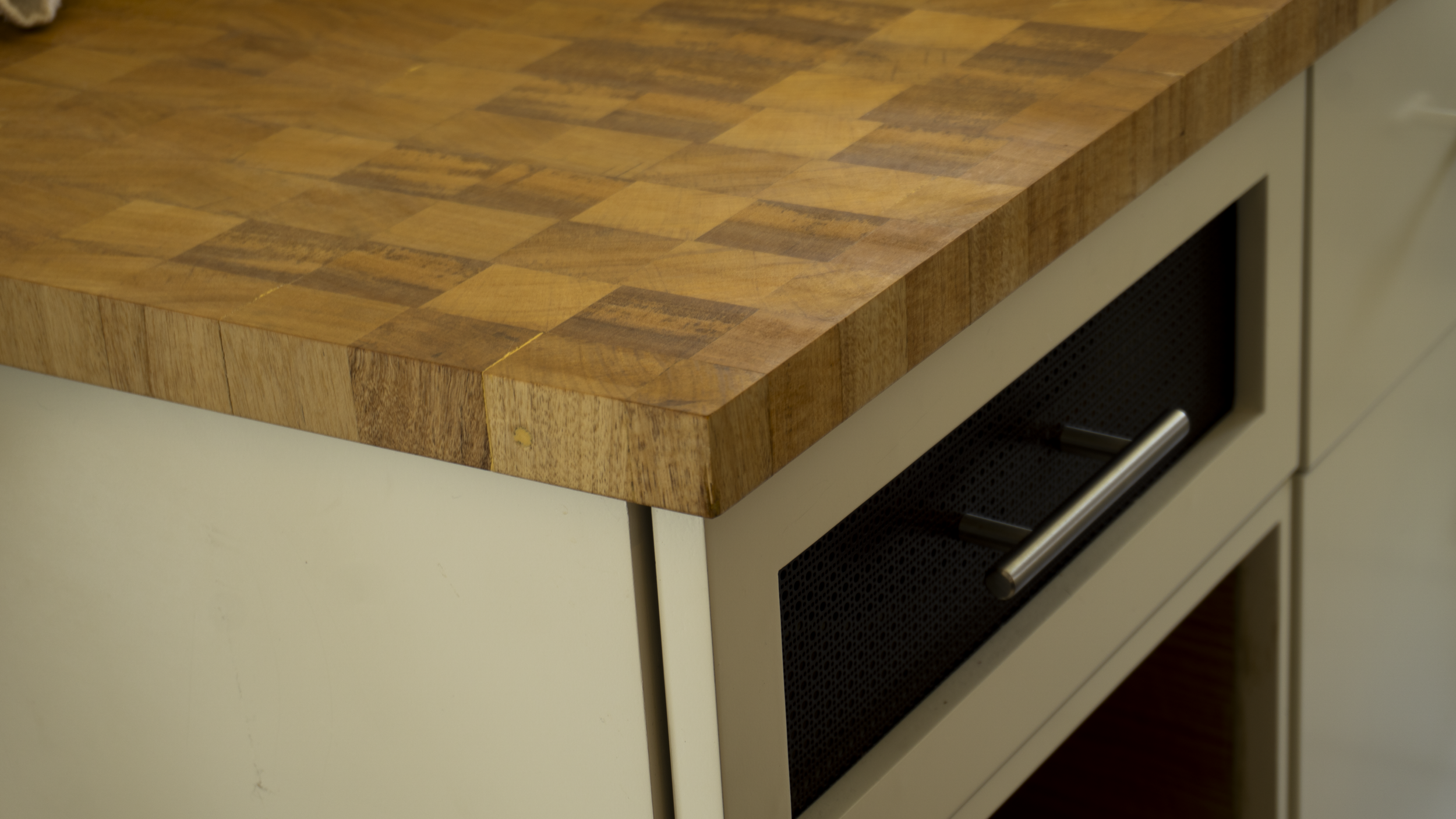
1. Partial Overlay (The Traditional Choice)
Definition: In a partial overlay, the door and drawer fronts only partially cover the cabinet frame, leaving a significant portion of the frame visible between adjacent doors and drawers.
Appearance: This style offers a more traditional or classic look, with the exposed frame creating clear borders and segments around each door opening.
Craftsmanship & Cost: Partial overlay is generally the most economical and least labor-intensive option. Because the wide gaps hide minor misalignments, it requires the least precision in both manufacturing and installation.
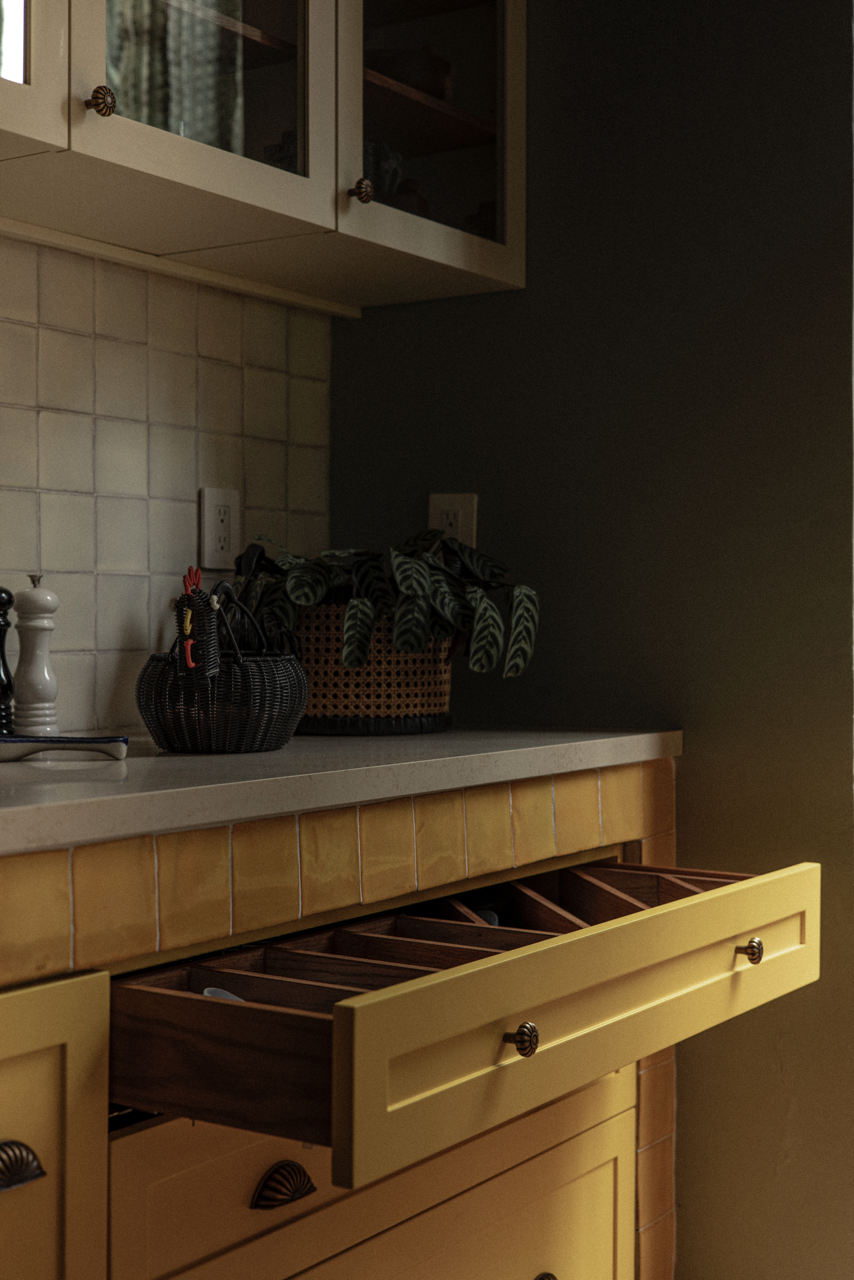
2. Full Overlay (Modern & Minimal)
Definition: Full overlay doors and drawer fronts are significantly larger than the opening and cover almost the entire cabinet face frame, leaving only a small, minimal seam between adjacent doors.
Appearance: This style creates a clean, streamlined, and sleek aesthetic, minimizing the visible frame and emphasizing the door style itself. This look is popular in modern and minimalist design.
Craftsmanship & Cost: Full overlay requires moderate precision in manufacturing and installation. While still more cost-effective than inset, the much tighter seams demand more accurate alignment during production and install to maintain a consistent look.
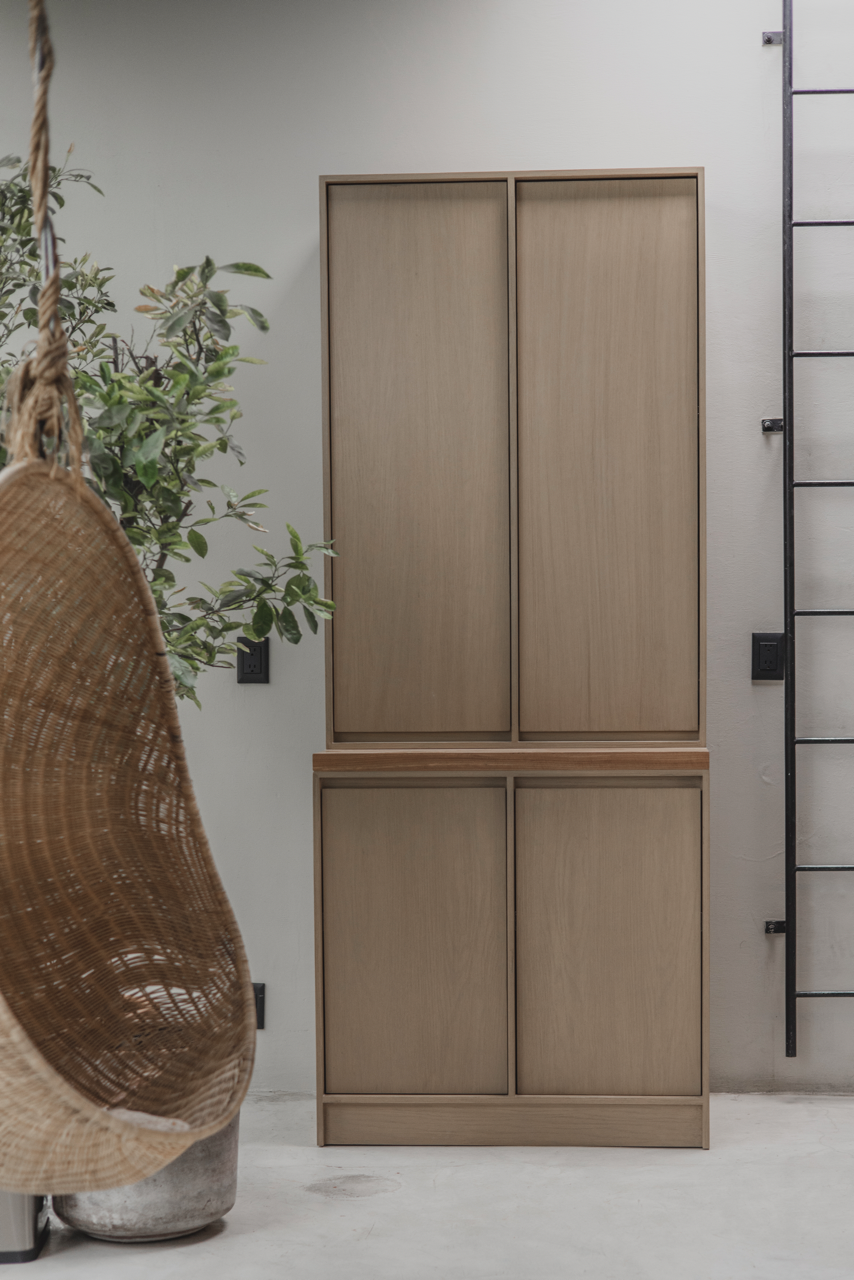
3. Inset (Top-Tier Craftsmanship)
Definition: Inset cabinetry is often considered the highest quality & most labor-intensive option. The door and drawer fronts sit inside the cabinet frame opening, fitting perfectly flush with the frame when closed.
Appearance: Inset creates a custom, furniture-grade look reminiscent of classic, high-end, and historic millwork. The precision of the fit provides timeless, elegant, and clean lines across the structure.
Craftsmanship & Cost: Inset cabinetry is generally considered the most difficult and expensive style to produce and install.
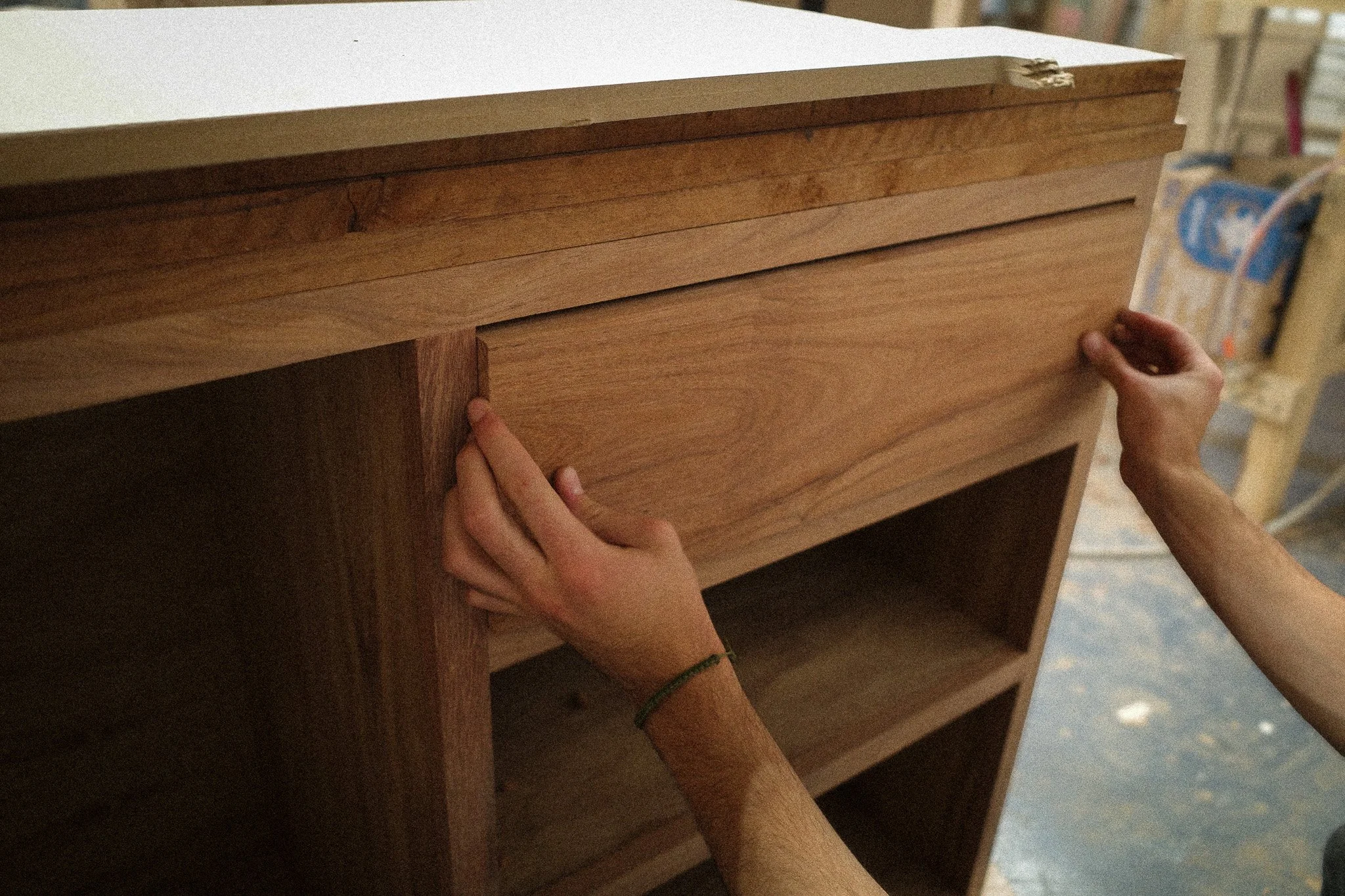
Precision is Absolute: Every door and frame must be built to exact, tight tolerances to ensure the doors don't bind or have inconsistent gaps.
Zero Forgiveness: Since the doors sit flush within a fixed frame, there is zero tolerance for error in measurement, construction, or installation.
Obra Specialization: Obra specializes in the level of precision required for Inset. We lead with Inset construction for all our projects & furniture—for instance, all our modules for Obra Elements Kitchen Islands utilize Inset construction. We can always explore alternative methods to meet budget constraints or alternative styles.
Part II: Obra’s Design Versatility
Our clients often ask if we can only make traditional or modern "Mexican-style" cabinets due to our Mexico City base. The answer is simple: No. Our design perspective is globally informed, and our production capabilities are vast.
Concepts and Aesthetics
Our design and production teams possess extensive experience working across a comprehensive range of design languages:
Traditional & Modern Shaker: From classic rail-and-stile proportions to sleek, thin contemporary shaker profiles.
Minimalist: Achieving pure, clean lines necessary for full overlay and seamless inset designs.
Finer Notes/Detail: Incorporating elements like crown molding, custom joinery, and fine millwork details that bring depth and character to every style.
We do not adapt to one style; we adapt for your concept. As highlighted in all of our projects & furniture, we build the concept and design for your space based on your rituals. We will work through any concept, bring fresh ideas to the table, or meticulously match your specific needs, ensuring the final piece feels authentically yours.
The Benefit of Our Mexico City Perspective
Our team is on the cutting edge of the contemporary Mexican design scene—a movement known for its elegance, natural materials (stone, wood, cement, woven textiles, etc.), and references to traditional craftsmanship.
Our commitment is to continuously educate ourselves on the latest technologies (like optimizing MDF core structures) and refer back to timeless favorites (like perfect Inset construction). This dual focus allows Obra to deliver truly customized, high-performing, and beautiful solutions, regardless of your style.
Have questions? Want to explore some of these styles? Ready to see the possibilities for your next project?
Email Howdy@ObraProjects.com to discuss your next project or custom piece of furniture. Thank you for reading!!